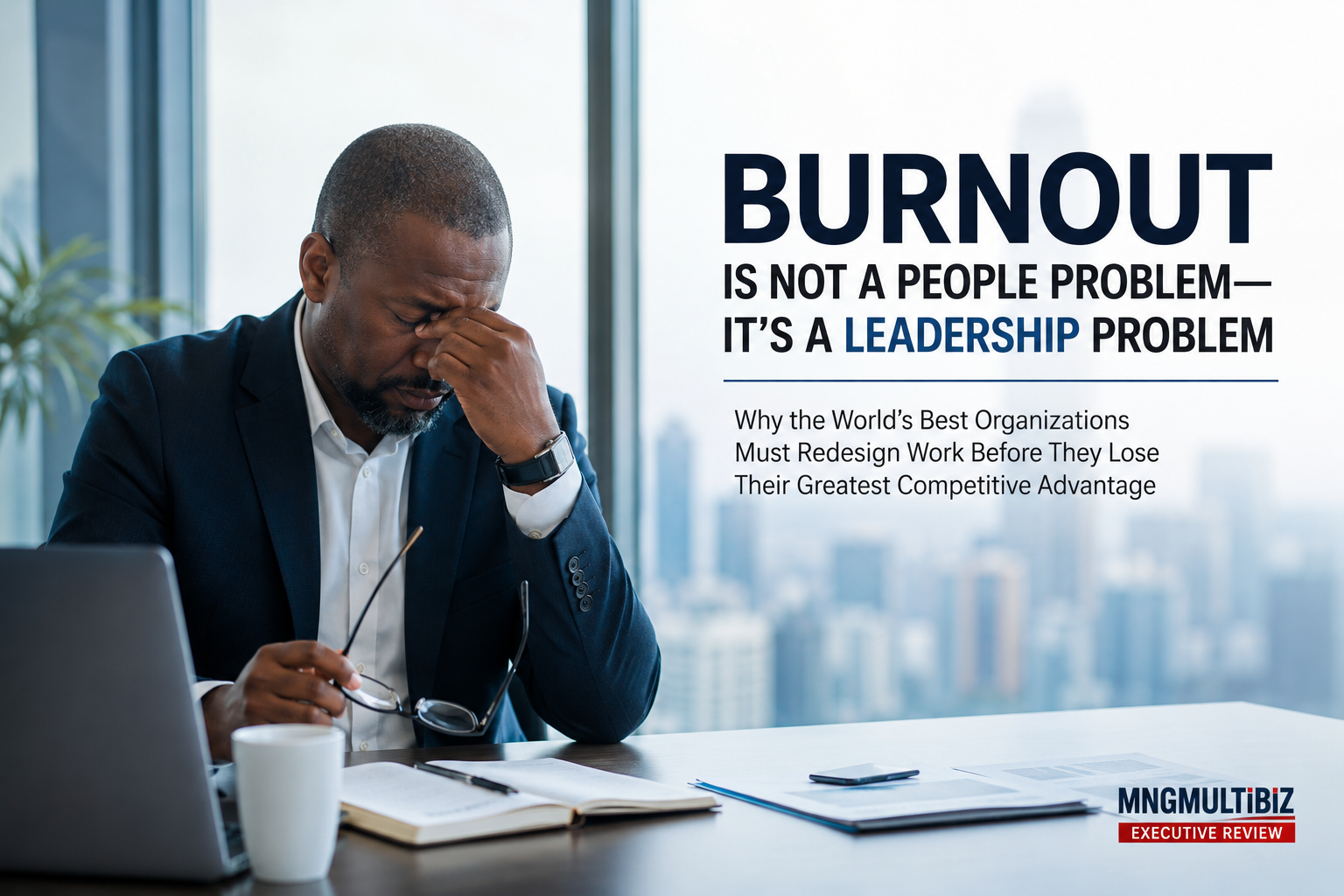
Why the World’s Best Organizations Must Redesign Work Before They Lose Their Greatest Competitive Advantage
By Mfreke George
Executive Review | MNG MULTI-BIZ
For decades, organizations have treated burnout as an individual health issue. Employees are encouraged to take vacations, attend wellness seminars, meditate, exercise, or achieve a better work-life balance. Corporate wellness has become a multi-billion-dollar industry, and yet burnout continues to rise across sectors and continents.
This raises an uncomfortable question.
What if organizations have been trying to solve the wrong problem?
Burnout is often described as the consequence of people working too hard. Increasingly, however, evidence from modern workplaces suggests something different. Burnout is less about the number of hours people work and more about how organizations design work, distribute responsibility, define performance, and lead through uncertainty.
This distinction matters because the future of organizational competitiveness may depend less on recruiting exceptional talent than on preventing exceptional talent from becoming chronically exhausted.
In the twenty-first century economy, human capability has become the most valuable form of capital. Yet many organizations continue to manage it as though it were an unlimited resource.
The New Cost of High Performance
The global economy has fundamentally changed the nature of work.
Artificial intelligence has accelerated decision-making.
Digital communication has eliminated geographical boundaries.
Remote and hybrid work have dissolved the traditional separation between office and home.
Global competition has intensified expectations for speed, innovation, and continuous availability.
Ironically, technologies designed to improve efficiency have often increased the cognitive demands placed on leaders and professionals.
Today’s executives are expected to make more decisions, process more information, manage more uncertainty, and respond more rapidly than any generation before them.
Employees face similar pressures.
The result is a workplace where people are almost always connected but increasingly struggle to disconnect.
The modern organization has optimized communication.
It has not always optimized recovery.
Why Burnout Is Becoming a Strategic Risk
Many leadership teams continue to view burnout primarily through the lens of employee well-being.
That perspective is no longer sufficient.
Burnout has evolved into a strategic business issue.
When decision-makers become mentally exhausted, the quality of strategic thinking declines.
Innovation slows.
Risk assessment becomes less effective.
Customer experience deteriorates.
Leadership succession becomes more difficult.
Employee turnover increases.
Institutional knowledge disappears.
These outcomes affect far more than individual employees.
They influence organizational resilience, investor confidence, operational performance, and long-term competitiveness.
The organizations that dominate the next decade will not necessarily be those with the largest budgets or the most advanced technologies.
They will be those that preserve the intellectual capacity of their people while competitors gradually exhaust theirs.
The Dangerous Myth of the Heroic Leader
Business culture has long celebrated leaders who appear permanently available.
The executive who answers emails at midnight.
The founder who works every weekend.
The manager who never takes leave.
The CEO who proudly claims to survive on four hours of sleep.
These behaviours are frequently interpreted as evidence of commitment.
In reality, they often represent organizational failure.
When leadership depends upon personal endurance rather than institutional capability, the organization becomes fragile.
A business whose success depends on one exhausted executive is not resilient.
It is vulnerable.
Sustainable organizations are built upon systems, distributed leadership, and collective intelligence—not individual heroics.
The strongest leaders do not make themselves indispensable.
They build organizations that no longer require constant intervention.
The Productivity Paradox
Perhaps the greatest misconception in modern management is the belief that longer working hours inevitably produce better results.
Research in organizational psychology has consistently shown that human cognitive performance follows biological limits rather than corporate expectations.
Beyond certain thresholds, longer working hours frequently produce declining returns.
Decision quality deteriorates.
Creative thinking weakens.
Errors increase.
Collaboration suffers.
What appears to be increased productivity often becomes reduced effectiveness disguised as busyness.
In knowledge-driven industries, the limiting factor is rarely effort.
It is cognitive capacity.
Organizations that ignore this distinction risk optimizing activity while undermining value creation.
Leadership Has Entered the Age of Cognitive Capital
Historically, organizations competed primarily through physical assets.
Factories.
Machinery.
Infrastructure.
Natural resources.
Today’s competitive advantage increasingly depends upon intangible assets.
Knowledge.
Judgment.
Innovation.
Relationships.
Organizational learning.
Strategic thinking.
These capabilities originate in the human mind.
Unlike machinery, however, cognitive resources cannot operate continuously without renewal.
Exhausted minds make poorer decisions.
Poor decisions produce weaker organizations.
Consequently, protecting cognitive performance is no longer a human resources initiative.
It has become an executive responsibility.
Boards should therefore view employee well-being not merely as an ethical obligation but as a governance issue directly connected to organizational performance.
Artificial Intelligence Will Not Eliminate Burnout

Many executives believe artificial intelligence will eventually reduce workplace pressure.
The opposite may prove equally plausible.
AI increases productivity.
It also raises expectations.
As routine tasks become automated, organizations increasingly expect human workers to perform more strategic, creative, and emotionally complex responsibilities.
The consequence may not be fewer demands.
It may simply be different demands.
Future leadership will therefore require organizations to redesign work rather than merely digitize it.
Technology should amplify human capability—not accelerate human exhaustion.
Rethinking Organizational Success
The companies most likely to outperform over the next decade may not be those demanding the greatest effort from employees.
They may instead become those creating the healthiest environments for sustained excellence.
Such organizations understand that resilience is not built through constant pressure.
It is developed through intelligent workload design, psychological safety, leadership trust, learning opportunities, meaningful work, and sufficient recovery.
These factors do not reduce performance.
They sustain it.
The most progressive organizations have already begun shifting executive conversations away from employee satisfaction alone toward organizational sustainability.
The question is no longer:
“How hard can our people work?”
It has become:
“How long can our people continue performing at their highest level?”
Those questions produce fundamentally different leadership decisions.
A New Leadership Imperative
Every generation of business leaders confronts defining management challenges.
Industrialization required operational efficiency.
Globalization demanded strategic agility.
Digital transformation required technological adaptation.
The defining leadership challenge of this decade may be different.
It is preserving human capability in an increasingly demanding economy.
Organizations capable of protecting their people’s capacity for judgment, innovation, learning, and resilience will possess a competitive advantage that competitors cannot easily replicate.
Because while technologies can be purchased…
Capital can be raised…
Processes can be copied…
An organization’s collective human capability remains extraordinarily difficult to duplicate.
Conclusion
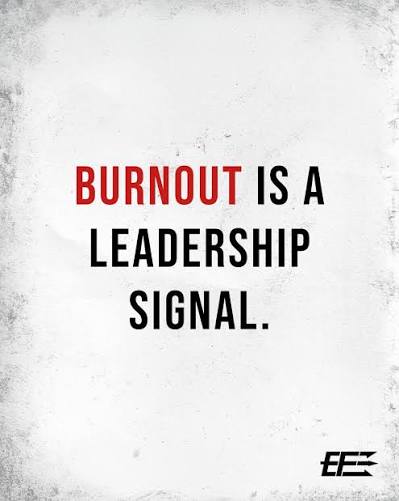
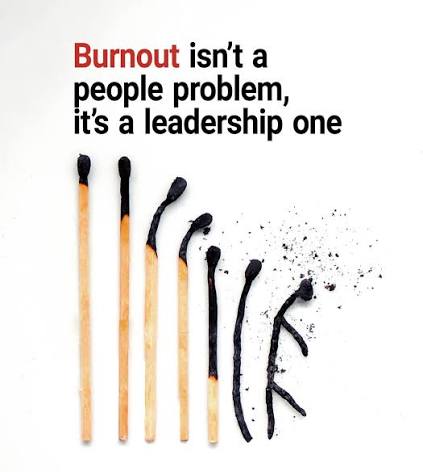
Burnout should no longer be viewed as an individual weakness requiring personal resilience.
It is increasingly a signal that organizational systems deserve executive attention.
The question facing modern leaders is therefore not whether employees should become more resilient.
It is whether organizations can become more intelligent in the way they design work.
History has repeatedly shown that businesses capable of adapting to changing markets survive.
The next generation of exceptional organizations may be distinguished by something equally important:
Their ability to protect the people whose thinking creates value in the first place.
Because in an economy increasingly powered by knowledge, the greatest competitive advantage is not technology, capital, or scale. It is sustained human performance.
Executive Insight | MNG MULTI-BIZ
“The defining leadership challenge of the twenty-first century is no longer how to make people work harder. It is how to build organizations where exceptional performance can endure without exceptional exhaustion.”
Mfreke George
Business Development Strategist | Executive Leadership Analyst | Executive Editor, MNG MULTI-BIZ Executive Review | HSE Officer | Maritime Security Safety Professional