
By MNG MULTI-BIZ GLOBAL LTD
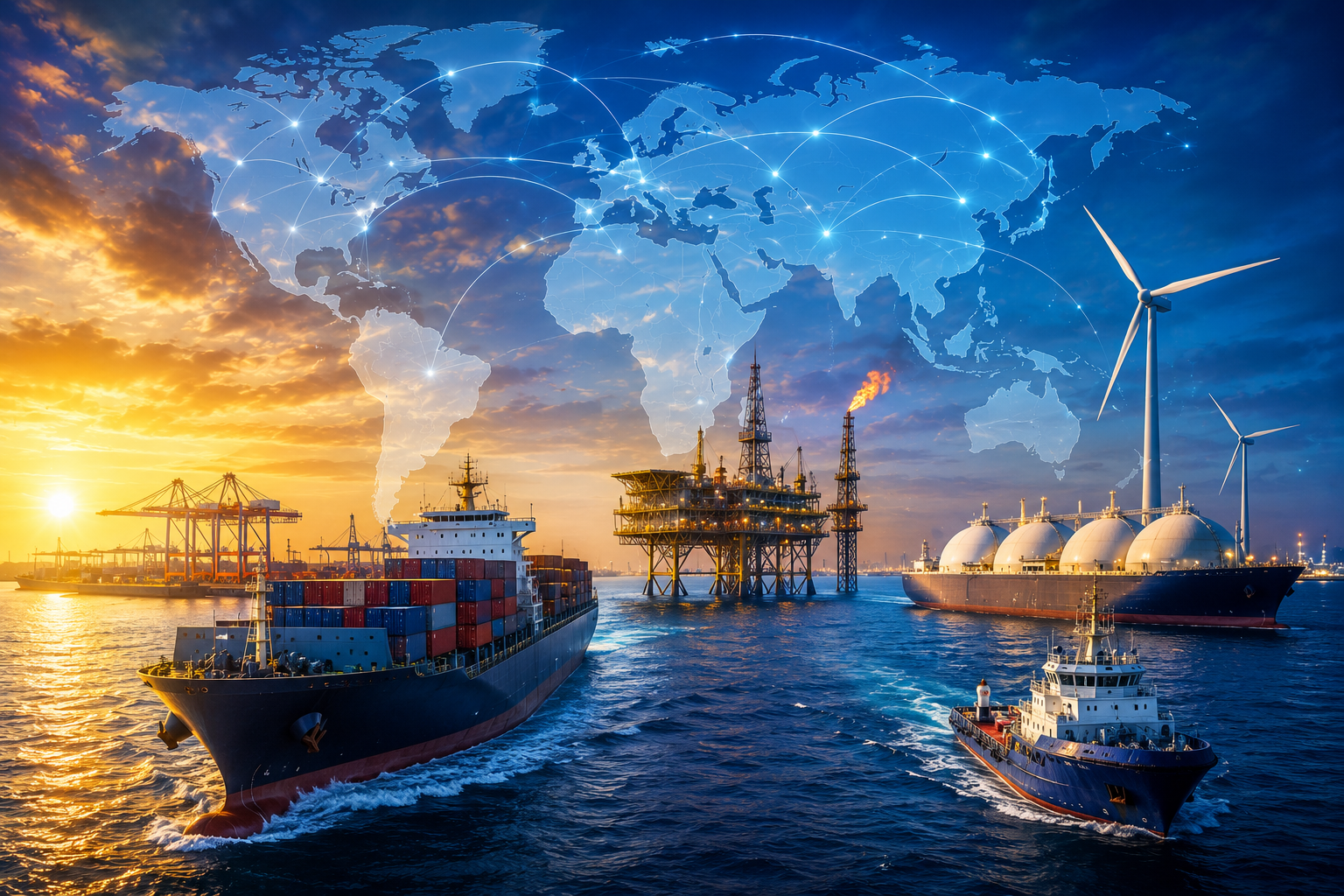
The maritime industry has long been the backbone of international trade, transporting nearly 90 percent of global commerce and serving as the critical link between producers, manufacturers, and consumers across continents. At the same time, the energy sector relies heavily on maritime transportation to move crude oil, liquefied natural gas (LNG), refined petroleum products, offshore equipment, and renewable energy components across international markets.
Today, however, both industries are undergoing one of the most significant transformations in modern history.
Driven by climate commitments, technological innovation, and changing global regulations, the maritime and energy sectors are working together to build a future that is safer, cleaner, smarter, and more sustainable.
Maritime Transport: The Engine of Global Energy
Every day, thousands of vessels navigate international waters carrying the world’s energy resources.
These include:
- Crude oil
- Refined petroleum products
- Liquefied Natural Gas (LNG)
- Liquefied Petroleum Gas (LPG)
- Offshore drilling equipment
- Wind turbine components
- Solar energy infrastructure
- Industrial machinery
Without efficient maritime transportation, global energy security would be impossible. Every disruption—whether caused by geopolitical conflict, piracy, port congestion, or extreme weather—has direct consequences for fuel prices, industrial production, and national economies.
The Global Push Toward Cleaner Shipping
The maritime sector contributes approximately three percent of global greenhouse gas emissions. As governments strengthen climate policies, the industry is under increasing pressure to reduce its environmental footprint.
Shipping companies are responding through investments in:
- Low-carbon fuels
- Energy-efficient vessel designs
- Carbon reduction technologies
- Digital voyage optimisation
- Shore power systems
- Green port infrastructure
The transition to cleaner shipping is no longer optional—it is becoming a strategic business necessity.
Alternative Marine Fuels
One of the most significant developments in maritime energy is the emergence of alternative fuels.
These include:
- Liquefied Natural Gas (LNG)
- Green Methanol
- Green Ammonia
- Hydrogen
- Sustainable Biofuels
- Battery-electric propulsion for short-distance vessels
Although conventional marine fuels remain dominant, industry experts expect alternative fuels to play an increasingly important role over the coming decades.
Offshore Energy and Maritime Operations
The relationship between maritime operations and offshore energy has never been stronger.
Modern offshore projects depend on specialised vessels for:
- Exploration support
- Platform construction
- Crew transfer
- Dynamic positioning operations
- Subsea engineering
- Equipment installation
- Emergency response
- Environmental monitoring
Safety remains the foundation of every offshore operation.
Effective risk assessment, competent personnel, emergency preparedness, and regulatory compliance are essential to protecting lives, assets, and the environment.
Digital Transformation
Digital technologies are changing the way maritime and energy companies operate.
Artificial intelligence, satellite communications, predictive maintenance, autonomous inspection systems, drone technology, and real-time vessel monitoring are improving operational efficiency while reducing downtime and operational risk.
Data-driven decision-making is becoming a competitive advantage throughout the maritime energy value chain.
Sustainability Beyond Compliance
Environmental sustainability is no longer viewed merely as regulatory compliance.
Investors, governments, customers, and financial institutions increasingly evaluate companies based on Environmental, Social, and Governance (ESG) performance.
Organisations that invest in cleaner technologies, responsible operations, and strong governance are positioning themselves for long-term competitiveness.
Opportunities for Africa
Africa possesses enormous opportunities within both the maritime and energy sectors.
Growing investments in offshore oil and gas, renewable energy, port infrastructure, coastal logistics, and the Blue Economy create significant opportunities for governments, private investors, and indigenous companies.
To maximise these opportunities, African nations must prioritise:
- Maritime infrastructure development
- Workforce training
- Safety and environmental standards
- Digital innovation
- Local content participation
- Regional collaboration
Developing these areas will strengthen economic resilience while increasing Africa’s participation in global trade.
Looking Ahead
The future belongs to organisations that successfully integrate innovation, sustainability, operational excellence, and safety into their business models.
As the maritime and energy sectors continue to evolve, collaboration between governments, regulators, investors, technology providers, and industry professionals will be essential for achieving secure and sustainable growth.
The companies that embrace change today will define the future of global energy transportation tomorrow.
About MNG MULTI-BIZ GLOBAL LTD
MNG MULTI-BIZ GLOBAL LTD [HOLDINGS LTD] is a diversified investment holding company structured to originate, own, allocate, and protect capital across strategically selected sectors, with a core focus on finance, banking, and investment services.
Building Businesses. Creating Opportunities. Empowering Sustainable Growth.


1 Comment
This is so educative and informative…