

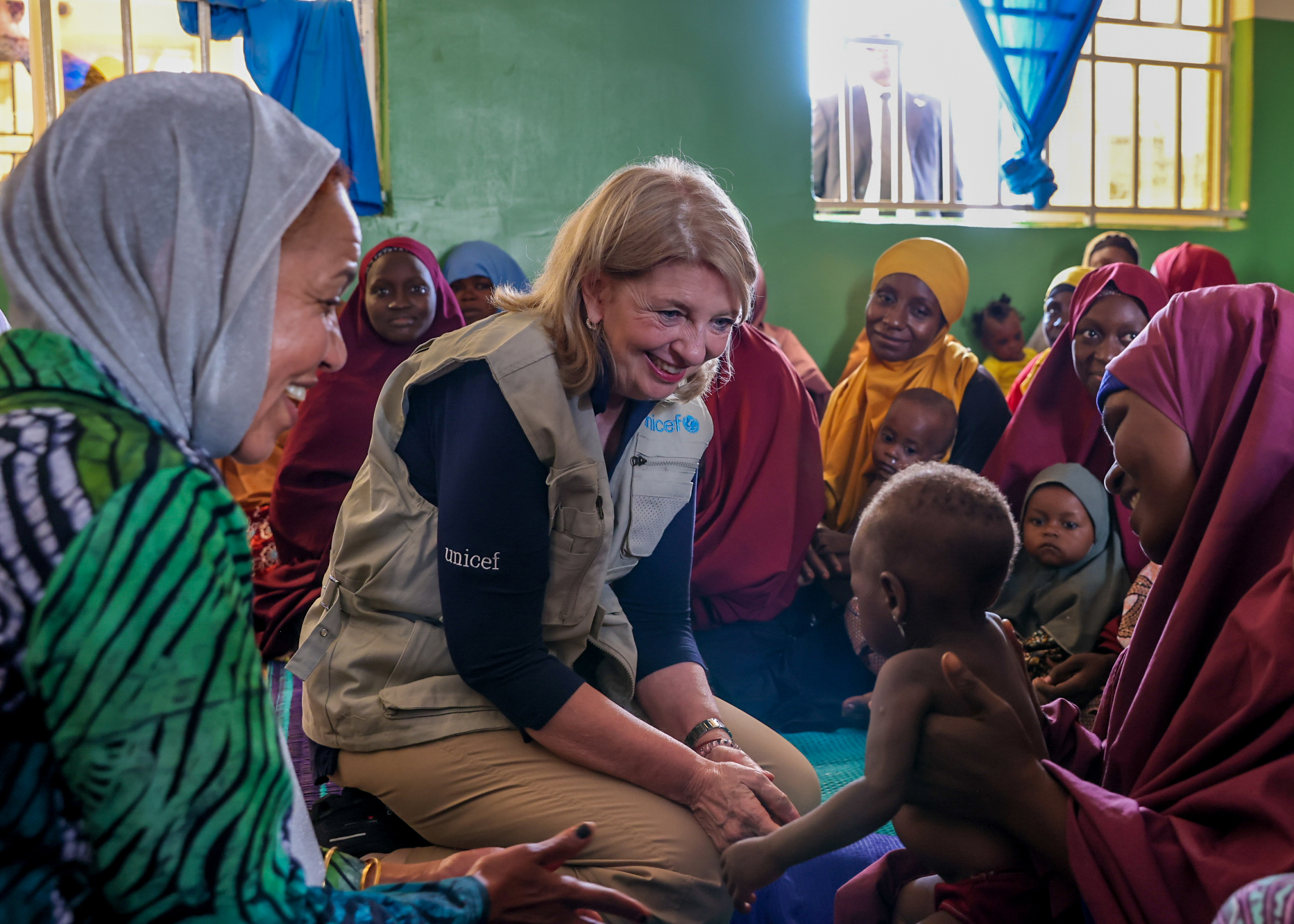
UNICEF has called on Nigeria to sustain investment in children despite mounting economic pressures, warning that rising living costs, global funding constraints and regional instability could threaten recent gains in health, education and social protection for the country’s nearly 105 million children and adolescents.
The appeal came from UNICEF Executive Director Catherine Russell at the conclusion of an official mission to Nigeria, where she highlighted the country’s unique demographic advantage. With children and adolescents accounting for about half of Nigeria’s population, Russell said the country has “one of the world’s greatest opportunities to turn a young generation into a powerful engine of human capital, innovation and resilience.”
“As rising prices strain vulnerable households, investing in children is more urgent than ever,” Russell said in a statement. “Everywhere I went in Nigeria, I saw the strength, ambition and potential of children and young people despite continued challenges.”
During her visit, Russell observed government and UNICEF-supported initiatives aimed at improving child welfare. In Sokoto State, northwestern Nigeria, she visited a healthcare facility treating children suffering from malnutrition and met young people benefiting from digital learning programmes designed to expand access to education.
She noted that Nigeria has recorded progress in areas including birth registration, school enrolment and social protection, describing these achievements as evidence of what can be accomplished when children’s needs are prioritised. However, she cautioned that sustaining those gains is becoming increasingly difficult.
According to Russell, global economic pressures, including the effects of the Middle East crisis, shrinking development funding and other external shocks, are creating new challenges for vulnerable families. In addition, insecurity, displacement and climate-related disasters continue to affect many communities across the country.
“Continued efforts are underway to strengthen health, nutrition, education, safe water and protection services. Investment and partnership are essential to ensure vulnerable children are not left behind,” she said.
Russell emphasised that the earliest years of a child’s life are critical for long-term development, arguing that access to nutrition, healthcare, education and protection lays the foundation for stronger communities and sustainable economic growth.
She welcomed commitments made by federal and state authorities and reaffirmed UNICEF’s readiness to work with governments, development partners and the private sector to expand opportunities for children.
“Nigeria’s future will be shaped by the choices made for children today,” Russell said. “Nigeria can be a positive example for shaping new models for investment in services and economic growth that benefits all children.”
As Africa’s most populous nation, Nigeria’s success in improving outcomes for children is closely watched by international development partners, with its youthful population increasingly viewed as a critical factor in the continent’s future economic and social development.
