

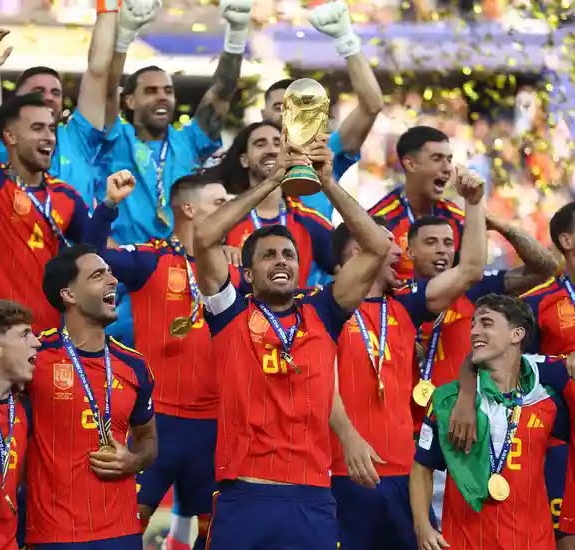
Spain ended a 16-year wait for a second FIFA World Cup title after Ferran Torres scored an extra-time winner to secure a 1-0 victory over defending champions Argentina in the 2026 final at MetLife Stadium in East Rutherford, New Jersey, United States.
Torres struck in the 106th minute to seal a hard-fought triumph and deny Lionel Messi’s Argentina a successful defence of the trophy. The victory crowns Spain as world champions once again and reinforces their position among football’s dominant international powers.
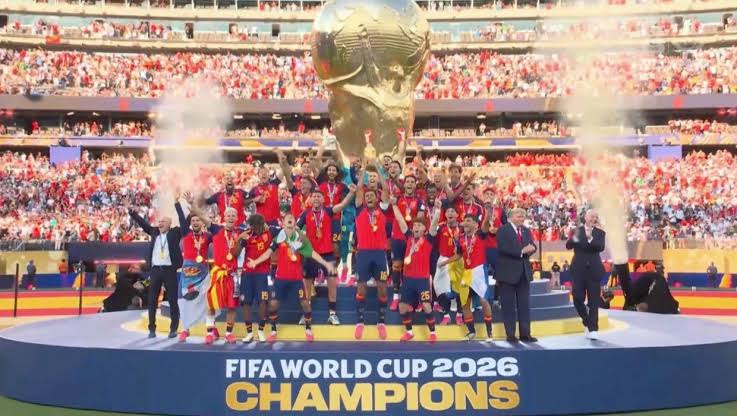
In a final that brought together Europe’s and South America’s leading teams—both unbeaten throughout the tournament—Spain controlled much of the contest but were repeatedly frustrated by Argentina goalkeeper Emiliano Martinez. The Argentine shot-stopper produced a string of outstanding saves, keeping his side level despite sustained Spanish pressure.
Spain created the first clear opening within five minutes when teenage star Lamine Yamal tested Martinez from close range. The European champions continued to dictate possession and chances throughout the match, yet neither side could find a breakthrough before halftime.
Argentina sought to change the game’s momentum after the restart, but coach Lionel Scaloni’s plans were complicated by injuries to central defenders Lisandro Martinez and Cristian Romero. The South Americans suffered a further setback when midfielder Enzo Fernandez was sent off after receiving a second yellow card at the end of normal time.
Despite their numerical disadvantage, Argentina defended resolutely and appeared set to force a penalty shootout. However, Spain finally found the decisive moment early in extra time. Nico Williams headed down Pedro Porro’s cross at the far post, allowing Torres to fire a first-time effort into the roof of the net beyond the reach of Martinez.
Argentina pushed forward in search of an equaliser, but Spain’s disciplined defence held firm to preserve the lead and secure the trophy.
The final showcased the highest level of international football, featuring the top two teams in FIFA’s world rankings and the reigning champions of Europe and South America. Spain’s victory echoed their 2010 World Cup success, when they also required extra time to lift the trophy.
The triumph marks another milestone for Spanish football and strengthens the country’s growing legacy on the global stage. Spain now holds both the men’s and women’s FIFA World Cup titles, underlining its status as one of the sport’s most successful nations.
